News

- Details
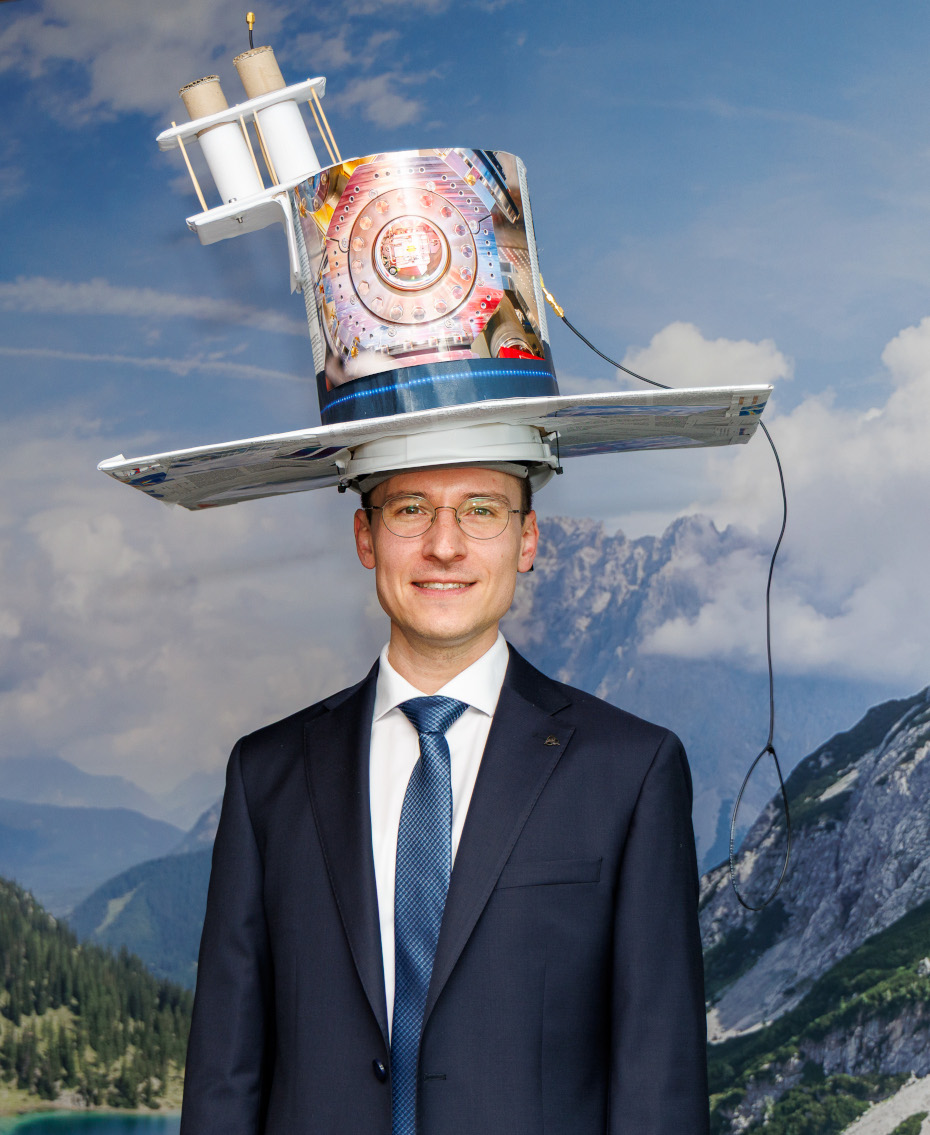
Andrea Turci completed his Masters on the topic of Bayesian Inference for Molecular Quantum Logic Spectroscopy. Congratulations, Andrea!
- Details
Florian Kranzl completed his PhD with the successful defense of his dissertation on Quantum simulations of the Heisenberg model with trapped ions. Congratulations, Florian!

- Details
Mid-circuit measurements are one of the biggest practical hurdles in quantum error correction on encoded qubits. Researchers in Innsbruck and Aachen have now proposed and experimentally demonstrated that a universal fault-tolerant quantum algorithm can be executed without such measurements. Using a trapped-ion quantum processor, the team successfully ran Grover's quantum search algorithm on three logical qubits.
- Details
Welcome Beatrice! Beatrice completed her Bachelor’s degree at the University of Padua and is currently pursuing her Master's degree in Physics of Condensed Matter at the same institution. For her Master's thesis, she has joined our Barium Lab, where she will work on in-sequence operations on Barium ions with the aim of achieving resolved sideband cooling on the S1/2–D3/2 transition.
- Details
Welcome back Lorenzo! Lorenzo completed his Bachelor's degree at the Alma Mater University of Bologna, and his Master's degree at the University of Padua. He conducted his Master's thesis at UIBK on RF electrodes optimization and effects of RF technical noise in surface electrode ion traps. Lorenzo will now join the Cryo team to work on scalable architectures for trapped ion quantum computing.
- Details
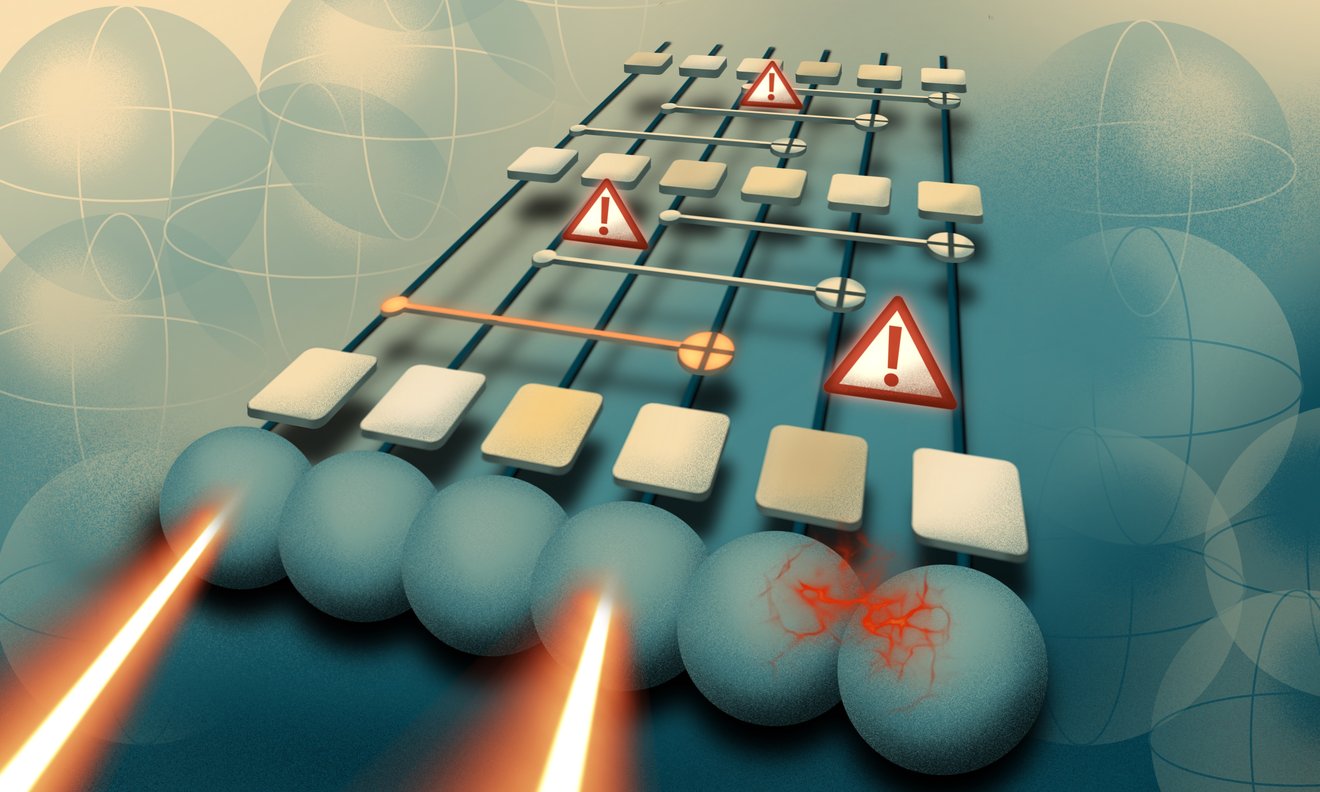
Researchers at the University of Innsbruck, together with partners from Sydney and Waterloo, have presented a new diagnostic method for quantum computers. It makes errors in individual quantum bits visible during logical calculation and evaluates them. The new method was demonstrated on an ion trap quantum processor in Innsbruck. It can be used to identify critical error sources —a key to developing more robust, fault-tolerant quantum processors.